

The History of Runyan Lake, Livingston County, Fenton, Michigan
Runyan Lake is located in Section 3 of Tyrone Township, Livingston County, Michigan. The lake is approximately 180 acres in size and has a maximum depth of about 55 feet. The lake is spring fed and has no major inlet or outlet streams.Marl Mining in the Area
In the late 1800s and early 1900s, marl was mined in many areas of Michigan for the production of Portland cement. Marl is a mixture of clay and calcium carbonate, and was used as a primary ingredient in cement manufacturing. Several cement companies operated in the region, including the Aetna Portland Cement Company and the Egyptian Portland Cement Company. Runyan Lake appears on early maps, but its origin is not clearly documented. Some believe the lake may have been enlarged or reshaped by marl mining operations, while others believe it is a natural kettle lake formed by glacial activity.
Early Maps of Runyan Lake
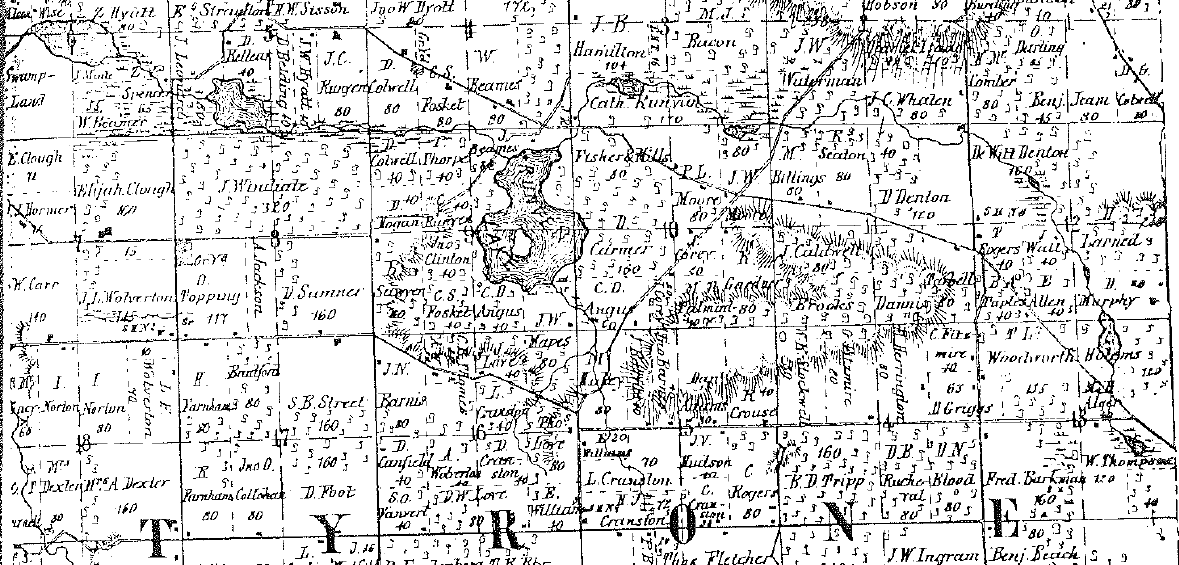
1859 Map
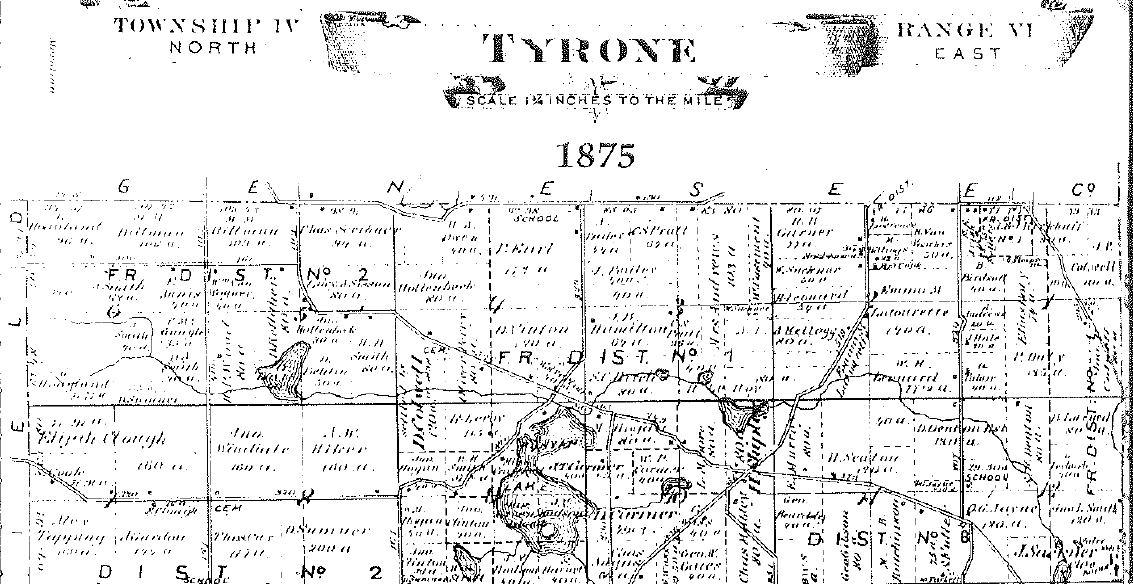
1875 Map
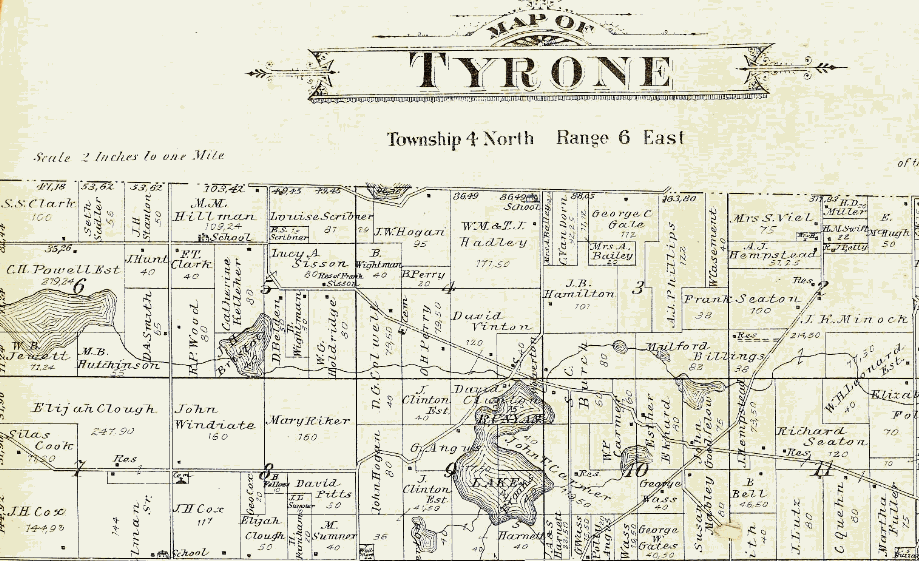
1895 Map
 These maps show the lake’s presence long before modern development, though the
shoreline varies slightly between surveys. This variation may reflect differences
in surveying methods or seasonal water levels rather than human alteration.
These maps show the lake’s presence long before modern development, though the
shoreline varies slightly between surveys. This variation may reflect differences
in surveying methods or seasonal water levels rather than human alteration. Geological Surveys & Cement Company Records (1900–1903)
The following information about marl deposits in the Runyan Lake area comes from Lower Peninsula, 1900–1903, Volume 8, Parts 1–3:
Egyptian Portland Cement Company. — This company owns a tract of land in section 3, Tyrone Township, Livingston County, on which there is a deposit of marl. The deposit lies in a small lake known as Runyan Lake. The marl is of good quality
and lies in water from 2 to 10 feet deep. The deposit covers about 40 acres and averages about 10 feet in thickness. The marl is underlain by clay.
The following description is taken from the survey: “Runyan Lake, in section 3, Tyrone Township, Livingston County, is a small lake
with marl bars extending out from the shore in several places. The water is deep and clear, and the bottom is composed of marl and clay. The lake is surrounded by rolling land, partly wooded and partly cleared. The shores are generally low, with occasional higher bluffs.”
The survey also includes test hole data, chemical analysis of the marl, and discussion of peat fuel availability in the region. The marl was considered suitable for cement production, though no large‑scale mining occurred at Runyan Lake.
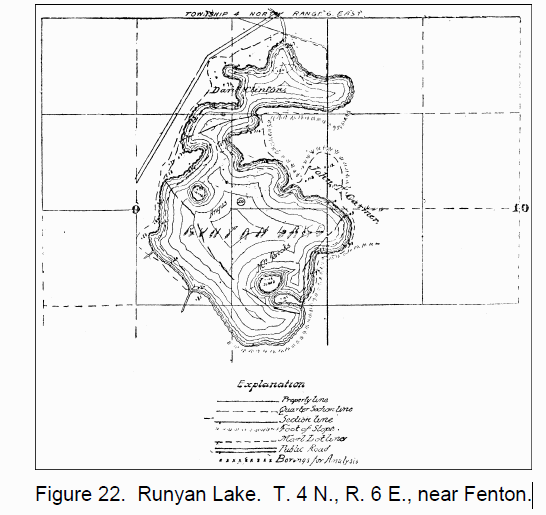
Twentieth Century Portland Cement Company. — This company also examined marl deposits in the region, including areas near Holly and Fenton. The map below shows the Holly deposit referenced in the survey.
Runyan Lake in 1900–1915
So what is our history? The following description of Runyan Lake was found in the book Lower Peninsula, 1900–1903, Volume 8, Parts 1–3:
“Runyan Lake, in section 3, Tyrone Township, Livingston County, is a small lake with marl bars extending out from the shore in several places. The water is deep and clear, and the bottom is composed of marl and clay. The lake is surrounded by rolling land, partly wooded and partly cleared. The shores are generally low, with occasional higher bluffs.”
This description suggests that Runyan Lake was already well‑formed and recognizable in 1900, with the same general characteristics we see today — deep water, marl bottom, and a mixture of wooded and cleared shoreline.
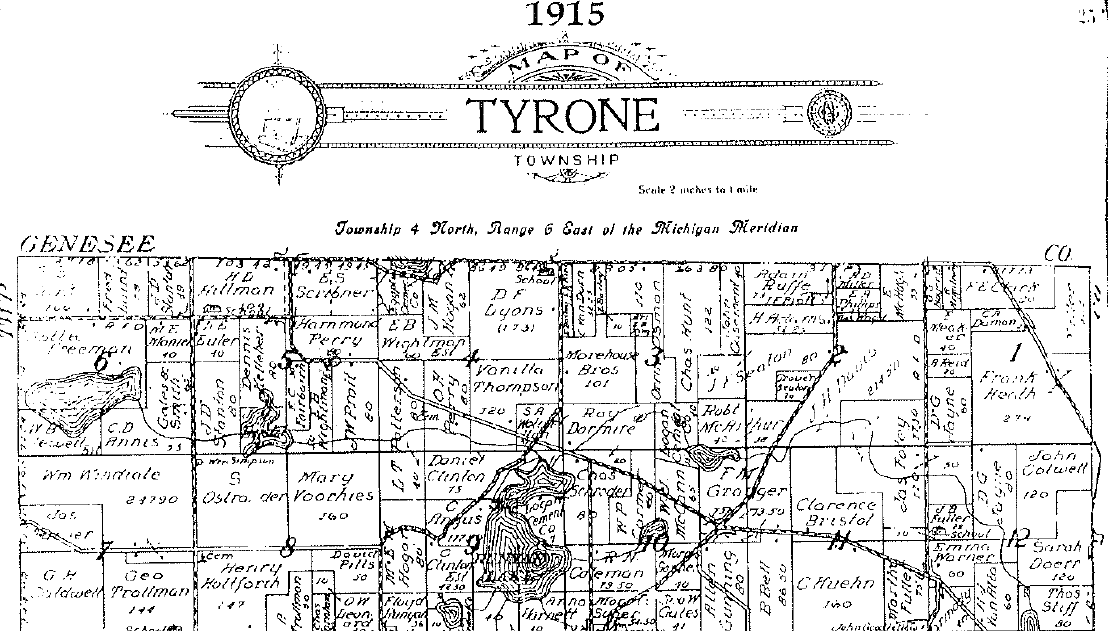
The map below, dated 1915, shows the lake and surrounding property ownership. At this time, the Logan Cement Company owned much of the land around the lake.
Runyan Lake in 1965 & Subdivision Growth
Fast forward to 1965 and we see the lake surrounded by several subdivisions. Runyan Lake Heights was platted in 1928–1929, Runyan Lake Point in 1932, and Runyan Lake Cove in 1960. These subdivisions formed the basis of the community that exists around the lake today.
Despite the development around it, the lake itself appears to have remained essentially the same size and shape as shown on earlier maps. The island in the center of the lake is also present on all maps and appears unchanged. There is no evidence that a railroad spur was ever built to the lake, despite
references in some historical accounts.
The 1965 map below shows the lake and surrounding subdivisions.

Conclusion & Acknowledgements
In conclusion, the available historical maps and geological surveys suggest that Runyan Lake is a natural lake that has existed in its present form since at least the mid‑1800s. While marl deposits were investigated in the area for cement production, there is no evidence that large‑scale marl mining occurred in the lake itself or that the lake was artificially enlarged.
The surrounding land was gradually developed into subdivisions beginning in the late 1920s, forming the residential community that exists today. The lake has remained essentially unchanged in size and shape for more than a century.
Acknowledgements
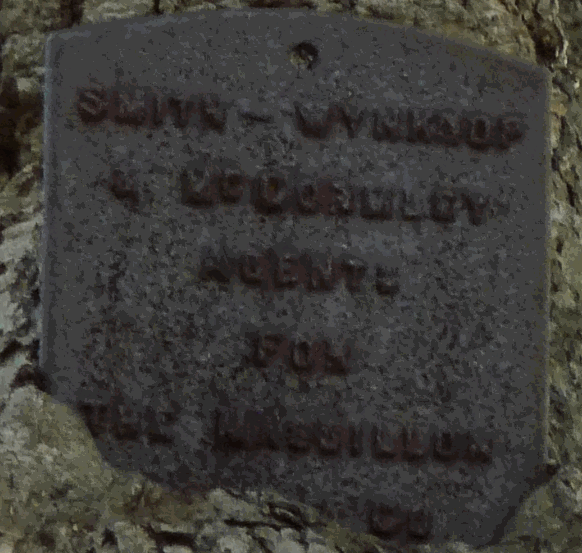
Special thanks to those who contributed historical maps, documents, and research materials used in compiling this history of Runyan Lake. The plaque shown below was found near the lake and is believed to be associated with the Massillon Bridge Company, which operated in the late 1800s and early 1900s.
Additional references include geological survey reports, historical atlases, and local archives documenting the development of Tyrone Township and the surrounding region:
Historicmapworks.com
Lower Peninsula, 1900-1903, Volume 8, Parts 1-3
By Michigan. Geological Survey
MICHIGAN GEOLOGICAL AND BIOLOGICAL SURVEY. Publication 8 Geological Series 6
DIRECTORY OF AMERICAN CEMENT INDUSTRIES FOURTH EDITION. REVISED